Traveling with Kids
How to Minimize Mosquito Bites
Traveling with children to mosquito-heavy destinations requires extra planning, but it does not have to be stressful. The key is knowing which repellents are safe at which age, creating physical barriers where possible, and staying calm if bites happen anyway. This guide covers everything from infant protection to managing itchy toddlers.
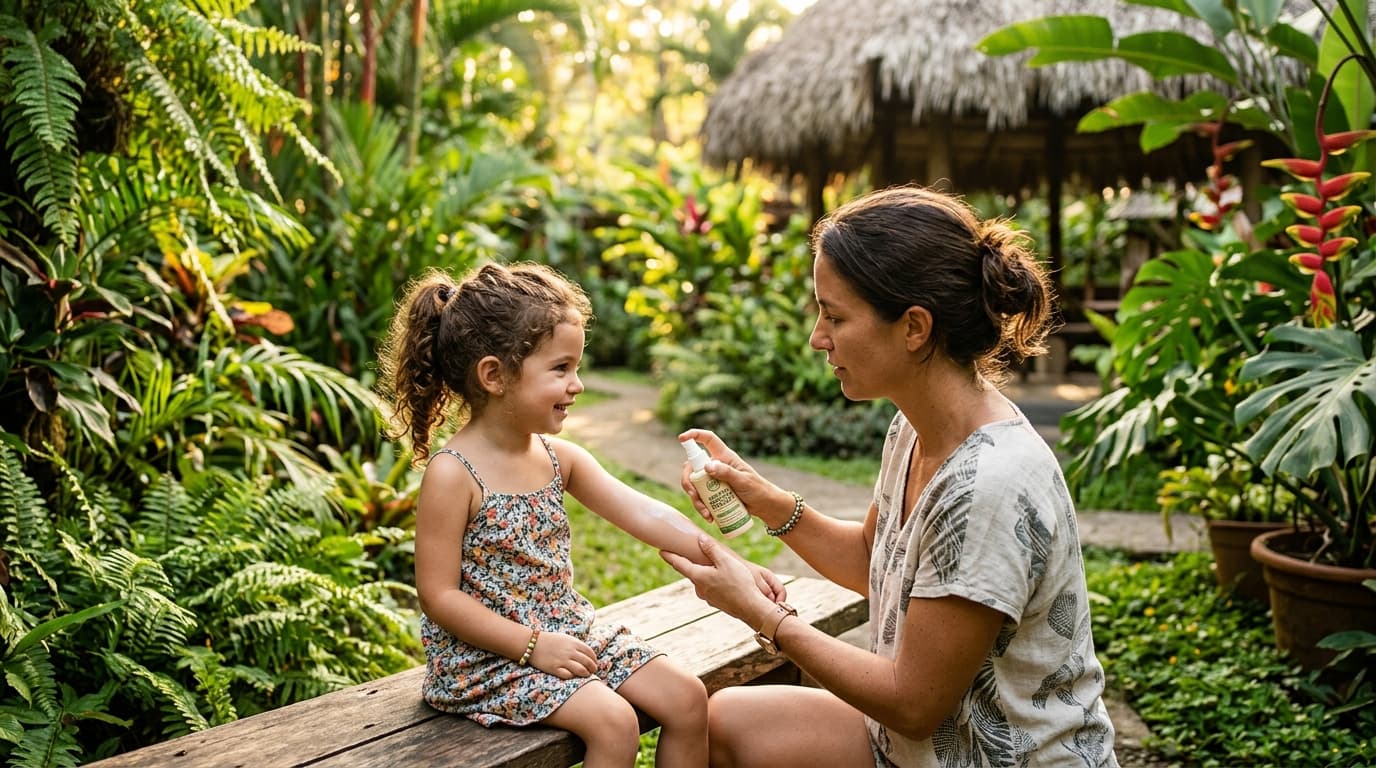
Age-Appropriate Repellents
The rules are straightforward but important. For babies under two months old, no repellent should be applied to the skin — physical barriers (nets, clothing, stroller covers) are your only tools. From two months onward, DEET products up to 30% concentration are approved for use by the American Academy of Pediatrics. Apply it sparingly, only to exposed skin, and wash it off once indoors.
Picaridin at 20% is an excellent choice for children of all ages (over two months) because it is odorless, non-greasy, and does not stain clothing. Many parents find their kids tolerate it better than DEET. Oil of Lemon Eucalyptus should not be used on children under three years old — the CDC is explicit about this restriction.
For application, always spray repellent onto your own hands first, then rub it onto the child. Never let children apply repellent themselves. Avoid hands, eyes, mouth, and any cuts or irritated skin. One application of 20-30% DEET or 20% Picaridin typically lasts long enough for an evening out — you should not need to reapply on short outings.
What we'd pack
Mozzwise may earn a commission on purchases made through these links at no additional cost to you.
Clothing as a First Line of Defense
Long sleeves and long pants in lightweight, breathable fabrics are the simplest and most effective mosquito barrier for kids. Light colors are better than dark — mosquitoes are visually attracted to dark clothing. Loose-fitting clothes work better than tight ones because mosquitoes can bite through fabric that sits flush against skin.
For tropical destinations, look for lightweight travel clothing with built-in UPF protection — these fabrics tend to have a tighter weave that also resists mosquito bites. Tuck pants into socks during dawn and dusk outings. It looks silly, but it works.
You can treat children's clothing with permethrin spray before the trip. Once treated, the protection lasts through 6-8 washes. This is particularly effective for safari trips, jungle excursions, or any extended outdoor time. Treat shirts, pants, socks, and hats — but never apply permethrin directly to skin.
What we'd pack
Mozzwise may earn a commission on purchases made through these links at no additional cost to you.
Accommodation and Sleeping
Your choice of accommodation makes a bigger difference than most parents realize. Air-conditioned rooms with intact window screens are your best friend — mosquitoes are far less active in cool, enclosed spaces. If your budget allows, prioritize AC over other amenities when booking in tropical destinations.
When AC is not available or windows do not have screens, a bed net is essential. For children, a compact travel net that tucks under the mattress works best — bell-shaped nets look elegant but are harder to secure for squirmy sleepers. Make sure the net has no holes and does not touch the child's skin, as mosquitoes can bite through netting that rests directly against the body.
For babies in cribs or travel cots, a fitted crib net or a carrier-style mosquito cover provides reliable protection. Some parents also use a clip-on fan near the sleeping area — the airflow makes it harder for mosquitoes to land and bite.
What we'd pack
Mozzwise may earn a commission on purchases made through these links at no additional cost to you.
What to Do When Kids Get Bitten
It will happen — no protection strategy is 100% effective. The first challenge is stopping children from scratching, which can lead to secondary infections in tropical climates. Clean the bite with soap and water, apply a cold compress to reduce swelling, and use an age-appropriate antihistamine cream or calamine lotion to manage the itch.
For babies, a cool damp cloth on the bite area is usually sufficient. For toddlers and older children, hydrocortisone cream (0.5-1%) applied two to three times daily can significantly reduce itching and swelling. Oral antihistamines like cetirizine (Zyrtec) or loratadine (Claritin) can help if multiple bites are causing distress — check dosing for your child's age and weight.
Watch for signs that need medical attention: increasing redness spreading from the bite, pus, fever, or unusual swelling. In tropical destinations, also monitor for symptoms of mosquito-borne diseases in the days and weeks following bites — fever, rash, joint pain, or persistent headache should prompt a visit to a doctor, and mention recent travel.
What we'd pack
Mozzwise may earn a commission on purchases made through these links at no additional cost to you.
More Guides
Explore more mosquito intelligence guides for travellers.