Travel Mosquito Nets
The Complete Buying Guide
A mosquito net is the single most effective barrier between you and a night of bites — and potentially a mosquito-borne disease. If you are staying in budget accommodation, rural guesthouses, or anywhere without reliable air conditioning and window screens in the tropics, a net is not optional gear. This guide helps you pick the right one.
Why You Need One
The math is simple: malaria-carrying Anopheles mosquitoes bite primarily between 10 PM and 4 AM, exactly when you are sleeping and unable to apply repellent or swat. A properly hung mosquito net creates an impenetrable physical barrier during your most vulnerable hours. The WHO estimates that insecticide-treated nets reduce malaria cases by 50% in endemic areas — and that is a population-level statistic. For an individual traveler, the protection is even more significant.
Beyond malaria zones, nets are valuable anywhere you are sleeping without AC or intact window screens. Budget hostels in Southeast Asia, eco-lodges in Central America, camping in sub-Saharan Africa, hammock stays in the Amazon — these are all situations where a net dramatically improves both your protection and your sleep quality. Buzzing mosquitoes at 3 AM ruin rest even when disease is not a concern.
Many accommodations in tropical regions provide nets, but quality varies enormously. You will encounter nets with holes, nets that do not tuck properly under mattresses, and nets that have not been treated with insecticide in years. Carrying your own compact travel net means you are never dependent on what the guesthouse provides.
Types of Travel Nets
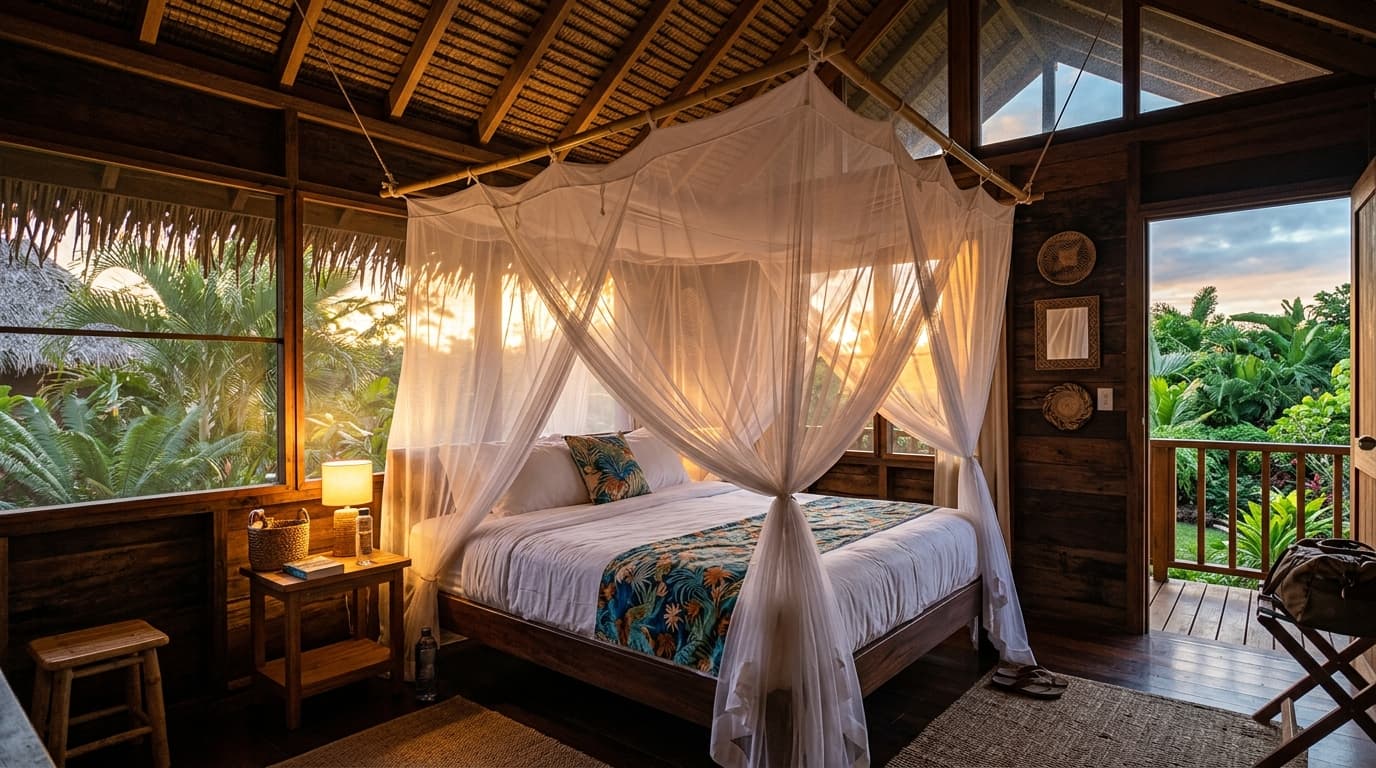
Rectangular box nets are the most versatile option for travel. They hang from four points and drape around the bed in a box shape, providing plenty of space inside and reducing the chance the net touches your skin (mosquitoes can bite through netting that rests against you). They pack down to roughly the size of a paperback book and work with any bed.
Bell or wedge nets hang from a single point above the bed and taper outward. They are lighter and faster to set up — just one attachment point — but offer less interior space and tend to rest against your face if the bed is narrow. These work well in situations where you need the lightest possible setup.
Pop-up or self-standing nets use flexible poles to create a tent-like structure over the sleeping area. They need no hanging points, which makes them ideal for situations where you cannot attach anything to the ceiling. The trade-off is that they are slightly bulkier and heavier than hanging nets.
Hammock nets are purpose-built to enclose a hammock, with integrated attachment points. If your itinerary includes jungle lodges or Amazon river trips where hammock sleeping is common, these are essential. Standard bed nets do not work well with hammocks.
What we'd pack
Mozzwise may earn a commission on purchases made through these links at no additional cost to you.
Permethrin Treatment — Treated vs Untreated
An untreated net works as a physical barrier only — mosquitoes that land on the outside will wait for any gap or skin contact. A permethrin-treated net is both a barrier and a weapon: mosquitoes that touch the treated fabric are repelled or killed within minutes. The difference in real-world protection is significant, especially when nets inevitably get tucked imperfectly or develop small holes over time.
Factory-treated nets (often marketed as Long-Lasting Insecticidal Nets, or LLINs) maintain their permethrin effectiveness through 20 or more washes. The treatment is bonded into the fabric fibers rather than simply applied to the surface. For frequent travelers to high-risk destinations, a factory-treated net is worth the premium.
DIY permethrin treatment is a solid alternative if you already own an untreated net. Soak or spray the net with permethrin solution (0.5%), let it dry completely, and you have protection that lasts through about 6 washes. You will need to retreat periodically, but the cost is low and the process takes about 30 minutes. Just do it outdoors — permethrin is toxic to cats and should not be applied in enclosed spaces.
What we'd pack
Mozzwise may earn a commission on purchases made through these links at no additional cost to you.
Mesh Density and Size
Mesh density is measured in holes per square inch. The WHO recommends a minimum of 156 holes per square inch for malaria protection — this is fine enough to block all mosquito species while still allowing reasonable airflow. Most quality travel nets meet or exceed this standard, but very cheap nets sometimes cut corners here.
Smaller mesh (higher hole count) provides better protection against sand flies and no-see-ums in addition to mosquitoes, but reduces airflow — a real consideration in hot, humid climates where you are already sleeping warm. For pure mosquito protection in the tropics, 156-196 holes per square inch is the right range. If sand flies are also a concern (parts of Central America, Mediterranean coast, rural India), look for 256+ mesh.
Size matters more than people expect. A net should be large enough to tuck generously under the mattress on all sides. If the edges hang loose, mosquitoes will find their way in. Measure your typical sleeping situation — most single travel nets are designed for beds up to queen size, but if you are tall or share a bed, check the dimensions carefully.
Packing and Setup Tips
Pack your net in its stuff sack, along with a few meters of lightweight cord and four small S-hooks or adhesive hooks. Many hotel rooms and guesthouses have attachment points (hooks, nails, curtain rods) but not always where you need them. The cord and hooks let you improvise hanging points from ceiling fans, curtain rails, or even bathroom pipes.
Before settling into a new room, do a quick mosquito audit: check window screens for holes, look for gaps under doors, and test whether the AC effectively cools the room. If the room is well-sealed and air-conditioned, you may not need the net at all. If screens are missing or torn, hang the net regardless of other precautions.
When hanging the net, ensure it is taut and does not rest against any part of your body while you sleep. Tuck the bottom edges under the mattress completely — leaving even a small gap is an invitation. In the morning, keep the net tucked to prevent mosquitoes from entering during the day and waiting for you at night.
Plan Around These Destinations & Diseases
More Guides
Explore more mosquito intelligence guides for travellers.